Historic Garden Week on the Eastern Shore
Saturday, April 25th, 2026
Experience rich history and pristine coastlines on the Eastern Shore. Plan a day on Virginia’s portion of the Delmarva peninsula and view the sunrise on the Atlantic Ocean and the sunset over the Chesapeake Bay. This tour takes place in Northampton County, where Historic Court Green is one of the most intact county administrative spaces in Virginia. It boasts the earliest continuous court records in the United States. Enjoy beautiful gardens and historic farms just far enough off the beaten path to transport visitors a world away. Of the total 211 square miles that make up this county, there is nearly twice as much water as there is land.
ADVANCE PURCHASE WRISTBANDS MUST FIRST BE PICKED UP AT TOUR HEADQUARTERS AT FRANKTOWN METHODIST CHURCH OR EYRE HALL. ONCE PROCURED, WRISTBANDS CAN THEN BE USED AT ANY TOUR STOP, IN ANY ORDER.
Tour Information
Ticketing for Historic Garden Week begins Monday, February 16, 2026 at 10:00am on the Historic Garden Week Website:
gcvirginia.org
Questions:
easternshore@vagardenweek.org
Helpful Tips
Box lunches offered by Franktown United Methodist Church (Tour HQ) pre-sale only, by 4/11:
Click here to pre-order box lunch
Visit the Eastern Shore of Virginia Tourism site for local restaurant listings.
Parking will be available at each property.
This tour requires walking in some outdoor settings. Please wear comfortable shoes.
Indoor photography is prohibited.
2026 Tour Homes
Eyre Hall
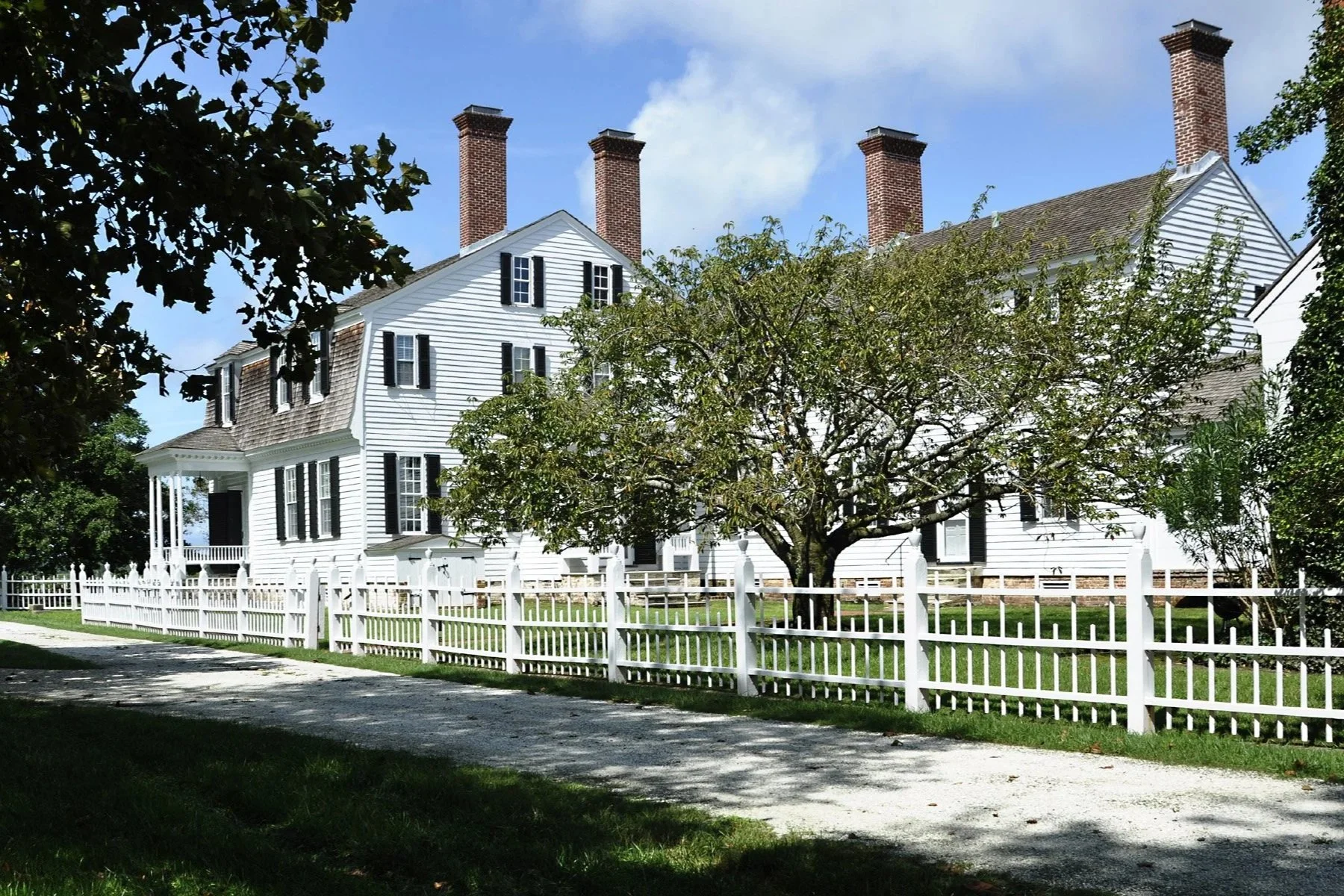
Honored as a National Historic Landmark, this acclaimed ancestral property offers a rare picture of colonial plantation life. The key to Eyre Hall’s remarkable preservation lies in its descent through nine generations of the same family. The gambrel-roofed manor was completed in 1758 by Littleton Eyre, who lavished his home with expansive spaces, superlative woodwork and handsome furnishings. Before the end of the century, Littleton’s son and grandson had, in their turn, inherited his masterwork, adding an eastern wing and laying out a grand rear garden. Happily, for historians, the three early owners were succeeded by stewards who declined to gild their classic legacy with the passing fancies of later eras. Today, Eyre Hall visitors are delighted to find that the refined style of its creators remains wonderfully in place. The past also lives in the garden, where venerable crepe myrtles tower above parterres enclosed by ancient boxwood and set off by colorful mixed borders. On the west, the recently stabilized remaining walls of an early orangery add a hint of romance to the garden scene. Beyond the house and garden, broad stretches of open fields and long views over Cherrystone Creek complete the placid panorama awaiting visitors to this perennial centerpiece of the Eastern Shore tour.
Sugar Run
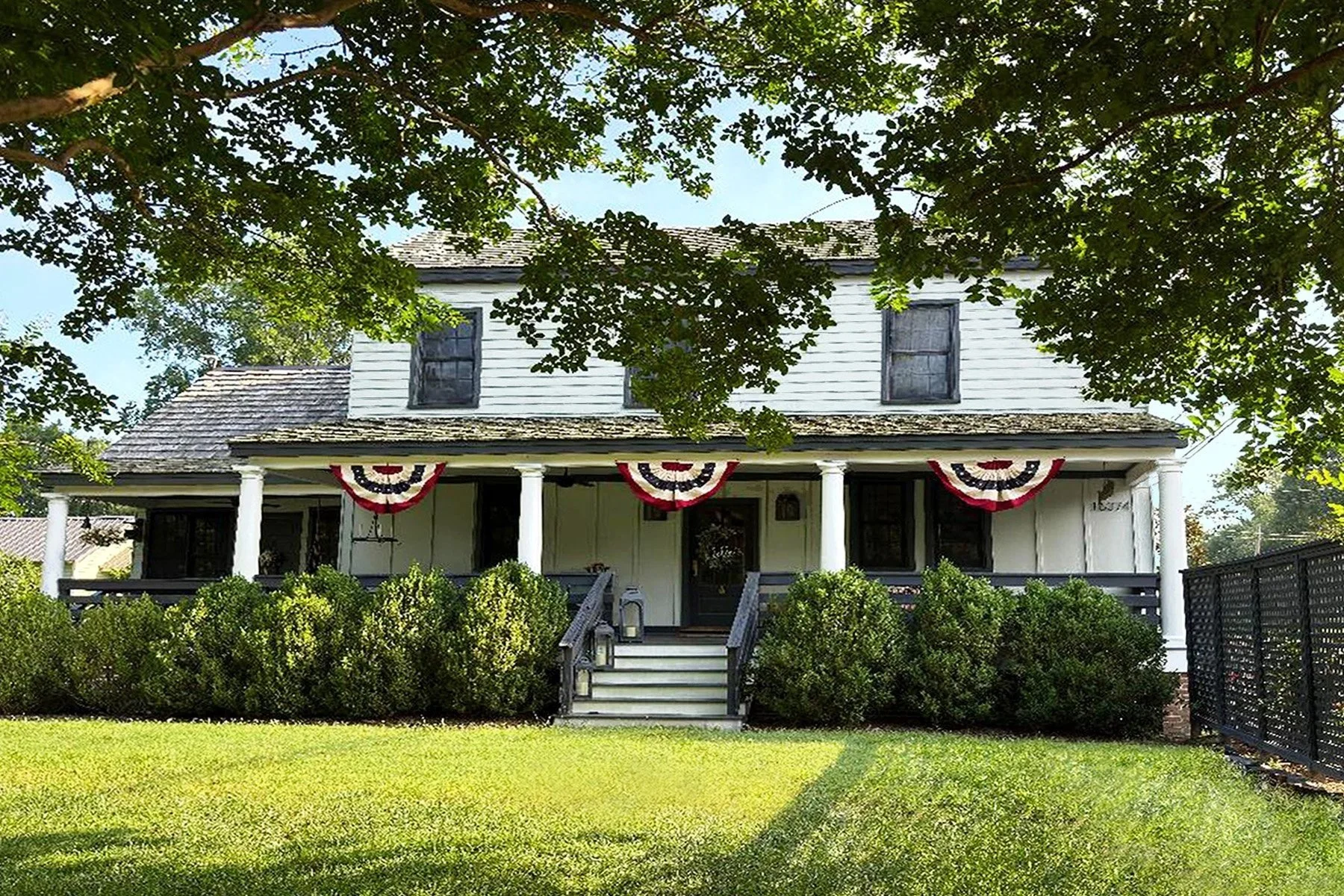
Situated next to the historic court green in the Northampton County seat, Eastville (1680), Sugar Run was built sometime in the 18th century and has been remodeled by the present owners since 2019. Historically, the home served as the first Masonic Lodge on the Eastern Shore of VA (1780) and as a hospital during the Civil War. The cottage onsite may have been owned by one of the first freed slaves in Northampton County. Original features in the home included floors and some shiplap in the main living space, and the fireplace. The owners salvaged and repurposed these original features throughout the house. As an interior designer, the owner loved the farmhouse look of the home and saw great potential to carve out multiple interior spaces from this gutted blank slate. Working with an architect, the owners opened the first floor to one large living space, reconfigured the interior stairway, and designed bathroom and kitchen spaces. When the property was purchased in 2019, only the large magnolia tree and Crepe Myrtles along the driveway existed. The owners have expanded with garden beds planted with historically accurate shrubs and flowers, along with some of their favorite perennials.
Roselawn
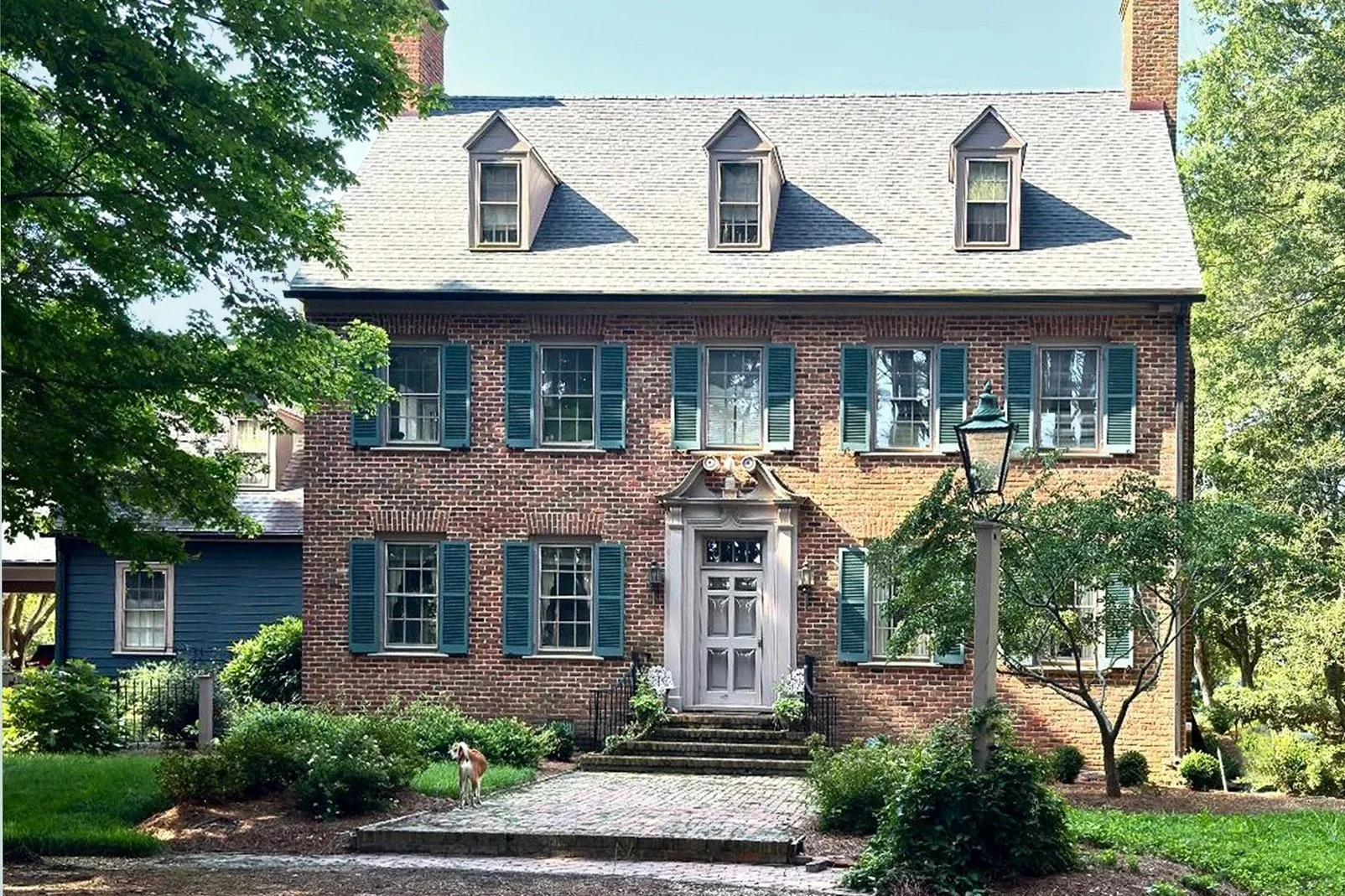
A drive through the picturesque village of Bayford and past its tiny harbor brings visitors to an attractive lane that threads through a stand of pines underplanted with rhododendrons and azaleas before opening to the house’s circular forecourt. Built in 1981 from old bricks, the main section of this Georgian-style house is copied from a previous residence of the family on Roselawn Road in Richmond. The addition of the clapboard wing is an adaptation of the Richmond house for more informal living. The house features distinctive architectural details: the split pediment over the front entrance was made by a local craftsman, windows are built into the chimney walls, there are deep windowsills, heavy chair rails, wide moldings and colonial casings. The center hall has a well-proportioned staircase with wainscoting. The handcrafted living and dining room mantels are copies of 18th-century mantels. Furnishings throughout the house include Hepplewhite, Chippendale and other Federal-period pieces. Last opened in 2001, changes include a kitchen remodel, a corner kitchen garden, and new beds of flowers and vegetables. Situated with water on three sides, Roselawn is positioned to take advantage of summer breezes and winter sun, offering marvelous views over Church Creek towards Chesapeake Bay.
Windemere
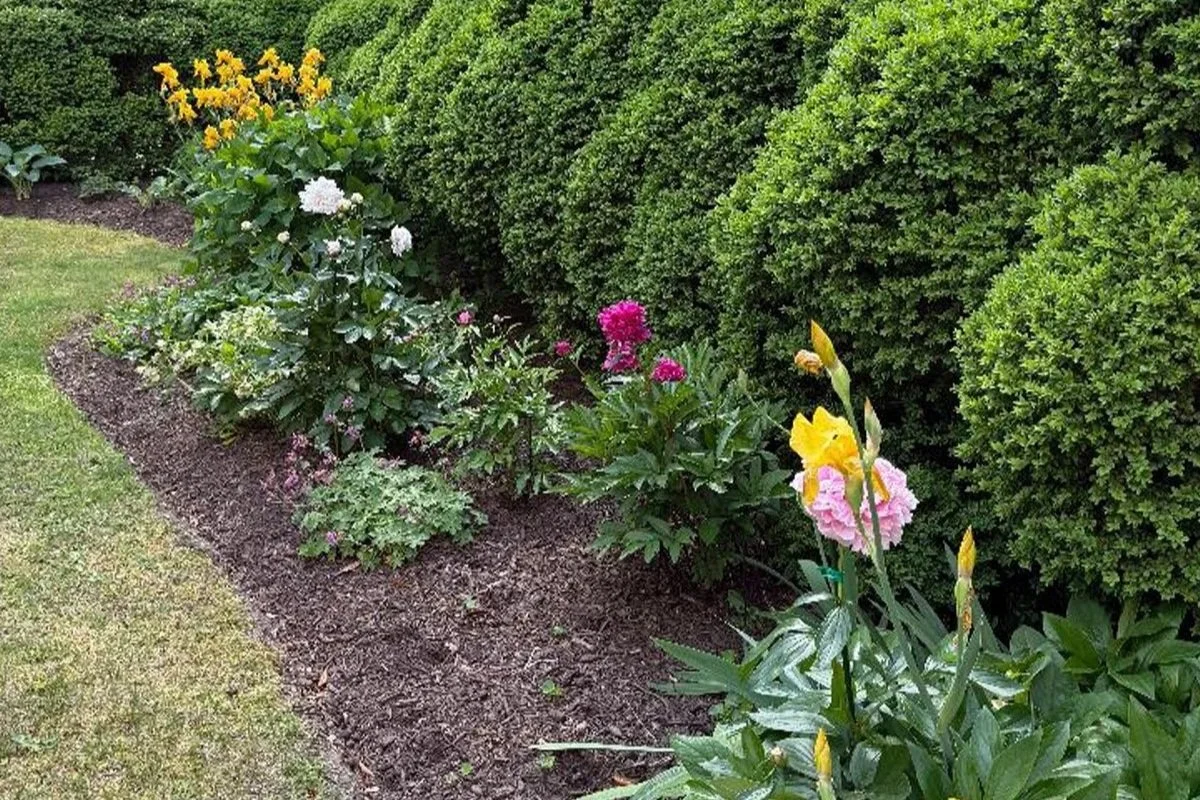
Windemere, a classic and stately gambrel-roofed home, has stood on its site in the charming town of Franktown for one hundred years and replaced a previous home from the 1880s that burned in 1920. Stands of boxwoods as old as the home highlight the gardens which have been expanded in the last five years by the present owners. Moss-covered pathways allow visitors to meander through the older boxwood gardens and add to the aura of this “secret garden”. Standouts in the gardens are iris, hydrangea and peonies surrounded by Virginia bluebells and more. A lovely side porch was enclosed when the home was remodeled in 1960 and allows for gardens to be enjoyed indoors. Gardens in the backyard are framed by outbuildings, including a former smokehouse and the overgrown foundations of a small horse barn. The windmill was built at the turn of the century to provide water to the house. A peony garden is planted beneath and expanded every year with different varieties, along with daisies. The stand of pines framing the property’s rear boundary was planted by a previous resident as a Boy Scout project to serve as a windbreak.
Rancho Contento
Garden Railroad
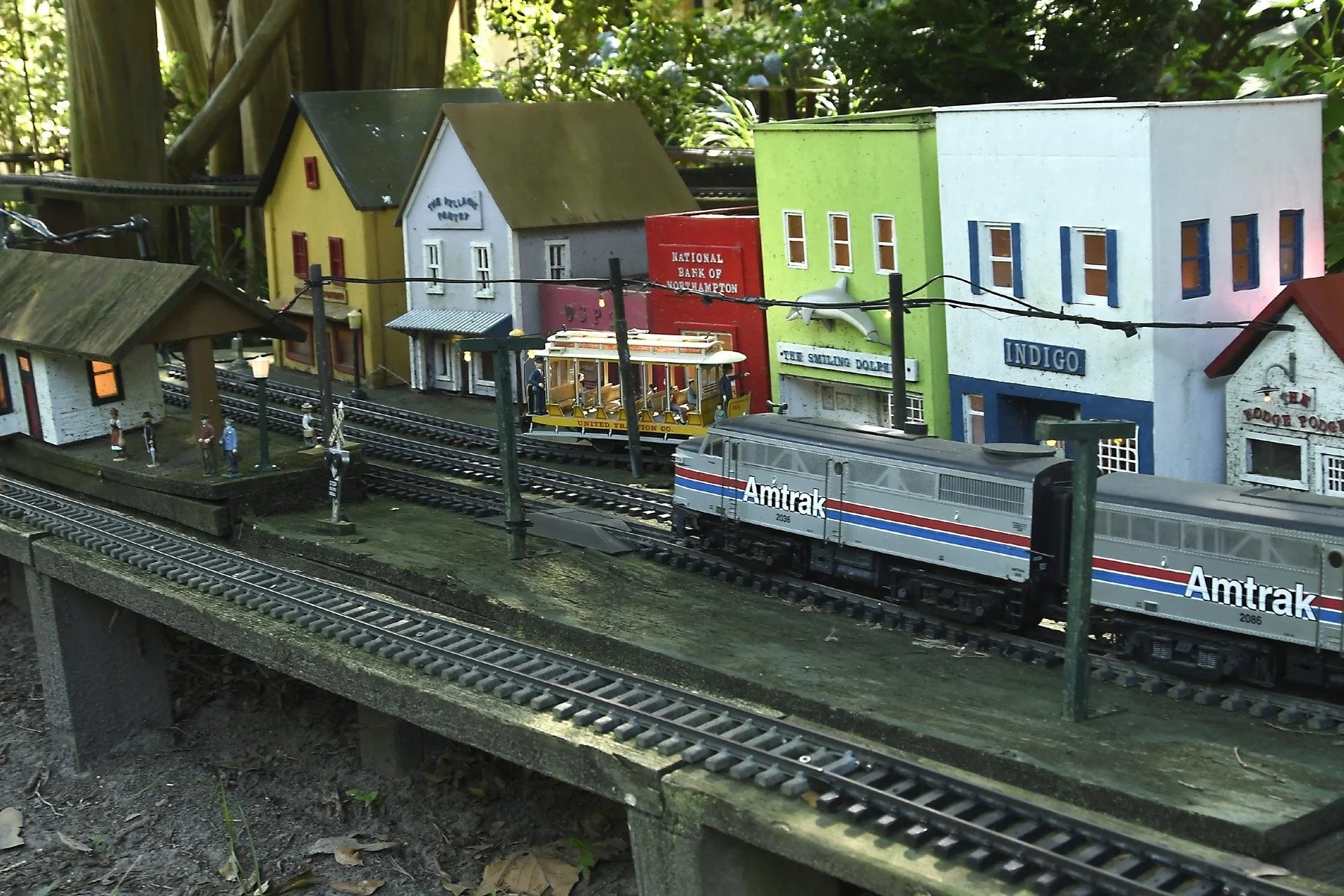
Located in the town of Nassawadox, this garden railroad and gardens surround a Federal-style brick home constructed in 1925. Nassawadox rose to local prominence as a center of trade and commerce for the steam-powered sawmill that was once located in town. Named for the Nusswatok Indians, the town name is derived from the Native American word for “land between two waters”. This year the Stiths celebrate fifty years in this stately home and in the backyard, Dr. Drury Stith has been constructing a G scale garden railroad for the last twenty years. This is a model train system that uses G gauge track (1.75 inches wide) and is designed for large indoor or outdoor layouts, often called garden railways. The models are larger than most scales, making them durable and weather-resistant for outdoor use. The Stith railroad now comprises over seven hundred feet of track with four main loops and two trolley loops. Models of historic Nassawadox and nearby Franktown buildings punctuate the garden railroad. These models include historic downtown stores, churches, and more. The gardens contain mature plantings, aged trees, massive crepe myrtles and nine varieties of boxwood to explore.
Ingleside
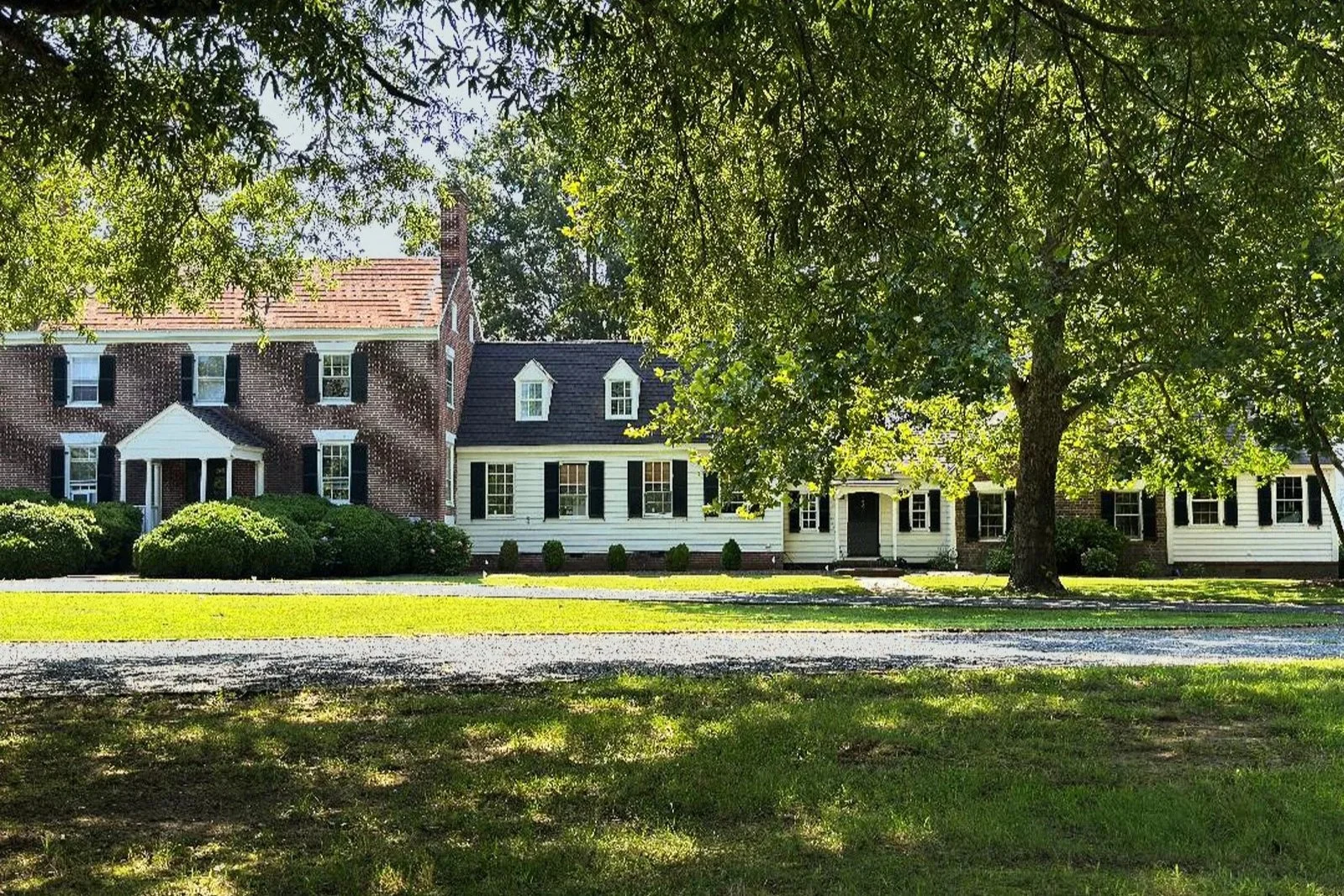
Overlooking Occohannock Creek and Morley’s Wharf, Ingleside (1786) is approached by an oyster shell road and a narrow bridge built over an inlet of Occohannock Creek. The property includes more than a mile of waterfront and nearly the same 300 acres in the original patent to John Baldwin in 1648. The brick home was built in the Federal period, laid in Flemish bond and situated on high ground with outstanding water views. The home is embellished with several notable Federal-period elements: a high porch entrance, a center hall plan with symmetrical double door entrances on the ends, paneled walls, and splendid wainscoting in the parlor and library where elaborately carved mantels anchor chimney breast walls. Other original, Federal-period details include heart pine flooring, plaster work, and exterior wood lintels over windows with a simple cornice. A garden of peonies and spring bulbs, planted by the owner’s grandmother, enhances the entrance yard. Two additions in 1957 and 1960 maintain the period and style of the original construction. A Young family burial plot is located in the northwest corner of the yard (1800-1855) Three generations of Walker family members have been raised in the home.
Thank you 2026 Sponsors!
dogwood sponsor
PNC Bank
rose sponsor
Tom Waller
lily sponsors
At Altitude Gallery /North Street Market
Bay Creek Realty
Coastal Shore Vacations
Abbi and John Custis
Harmanscapes
daffodil sponsors
Broadwater Academy
Chatham Vineyards
Eastern Shore Custom Carts
Ervin Architectural Products, Inc.
Jennifer W. Klein - Fine Art
Jenny Barker
Lizzy Webb designs
Matthew Freeze Painting Co.
New Ravenna
Taylor Bank
Weichert Realtors Mason-Davis
Williams Funeral Homes
seed sponsors
Coastal Flower Company
Love Letters